
Recipe recipe
How to Make Passion Fruit Tea – The Perfect Summer Recipe for Cafes (Includes Cost Calculation)
Passion fruit tea is a popular refreshing drink year-round, but it's especially in high demand during the summer thanks to its refreshing sweet and sour taste, eye-catching color, and versatility in various styles.
This paragraph 90S Coffee Sharing the recipe for making pre-made tea base in large batches – an approach many cafes use to quickly prepare drinks during peak hours – along with the recipe for brewing a perfect cup and how to calculate the cost.
1. How to make authentic passion fruit tea for summer at a cafe.
Instead of brewing tea in batches, the shop should prepare a large batch of concentrated tea concentrate in advance to shorten brewing time during busy periods.
How to Make Ready-to-Use Tea Base (1.000ml Batch)
Material:
- Black tea or oolong tea (in tea bags or loose leaf): 25g
- Hot water (approximately 90-95°C): 1.000ml
- Ice cubes: 250 – 300g (for thermal shock)
Steps:
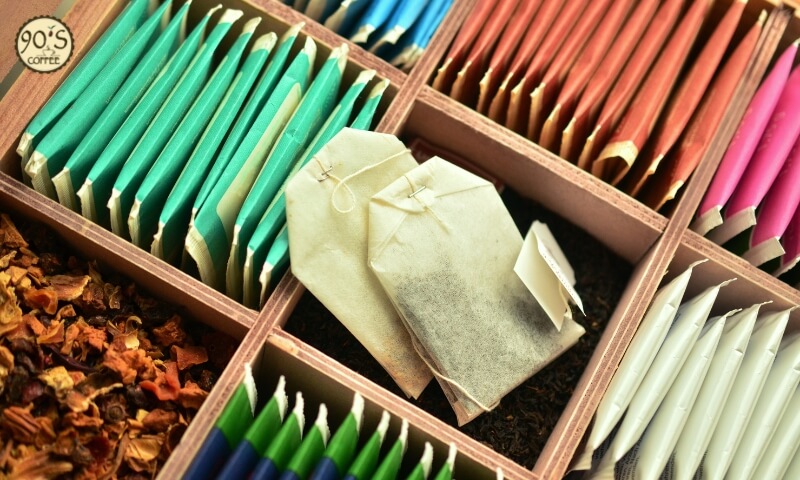
- Place the tea in a tea bag or a specialized strainer, and put it in a teapot with a tight-fitting lid.
- Pour hot water in, cover, and let steep for 6-7 minutes. Do not steep for too long, as the tea will become too bitter, resulting in a harsh aftertaste.
- After the steeping time is over, gently crush 2-3 tea bags to extract more liquid, then strain to discard the tea leaves.
- Thermal shock technique: While the tea concentrate is still hot, immediately add ice cubes and stir quickly. This step helps to suddenly lower the temperature, lock in the tea's aroma, and maintain a clear, beautiful color instead of becoming dull over time.
- Pour the tea concentrate into a jar/container with a tight-fitting lid and store in the refrigerator. It should be consumed within 2–3 days to ensure stable flavor and color.
Answers: Filter coffee is not good?You might be making these 6 mistakes.
2. Recipe for Making 1 Glass of Passion Fruit Tea for a Cafe (500ml)
Ingredient quantities:
- Tea base: 150ml
- Passion fruit juice: 30ml (approximately 1-1.5 fruits)
- Sugar syrup (sugar:water ratio 1:1): 40 – 50ml
- Filtered water/soda: 100 – 120ml
- Ice cubes: fill the glass
3. Steps to making passion fruit tea at a coffee shop
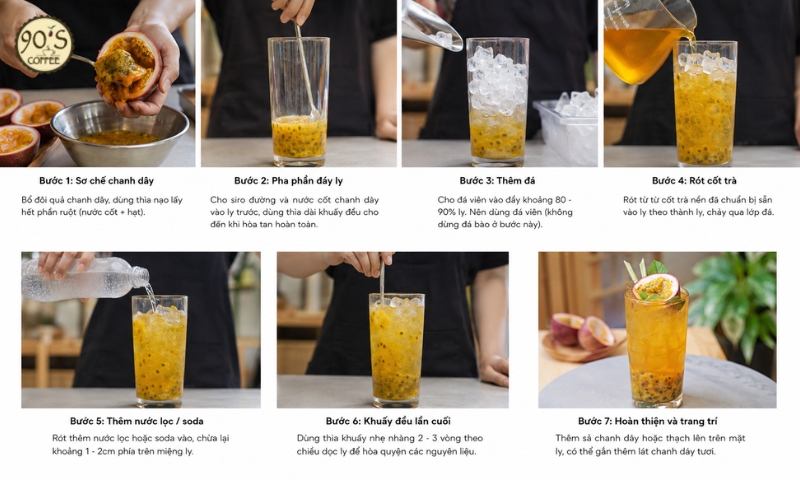
Step 1 – Preparing the passion fruit
Cut the passion fruit in half and use a spoon to scoop out all the pulp (juice and seeds). If you want a clear tea, strain it through a sieve to separate the seeds; if you want to preserve the texture and enhance the aesthetics, you can leave some of the seeds in to decorate the top of the glass.
Step 2 – Mix the bottom layer of the glass
Pour the sugar syrup and passion fruit juice into the glass first, then stir well with a long spoon until completely dissolved. This is an important step to ensure the sweet and sour flavors are evenly distributed from the bottom of the glass, preventing the bottom layer from being too sour/sweet while the top layer is bland.
Step 3 – Add ice
Fill the glass with ice cubes to about 80-90% full. It's best to use ice cubes (not crushed ice) at this stage so the ice melts slowly, preventing the tea's flavor from being diluted too quickly while the guest is enjoying it.
Step 4 – Pour in the tea concentrate
Slowly pour the prepared base tea (step 1) into the glass along the side, letting it flow over the ice. Pouring slowly and evenly helps the tea blend better with the base mix below instead of suddenly separating into layers.
Step 5 – Add filtered water/soda
Pour in more water or soda, leaving about 1-2 cm of space above the rim of the glass to prevent spillage when stirring. If using soda, pour gently and tilt the glass at an angle to retain the fizz and avoid losing the bubbles.
Step 6 – Stir one last time
Using a spoon, gently stir 2-3 times vertically in the glass (do not stir too vigorously as this will cause the soda fizz to dissipate or the ice to melt quickly) to ensure the ingredients are evenly mixed.
Step 7 – Finishing and decorating
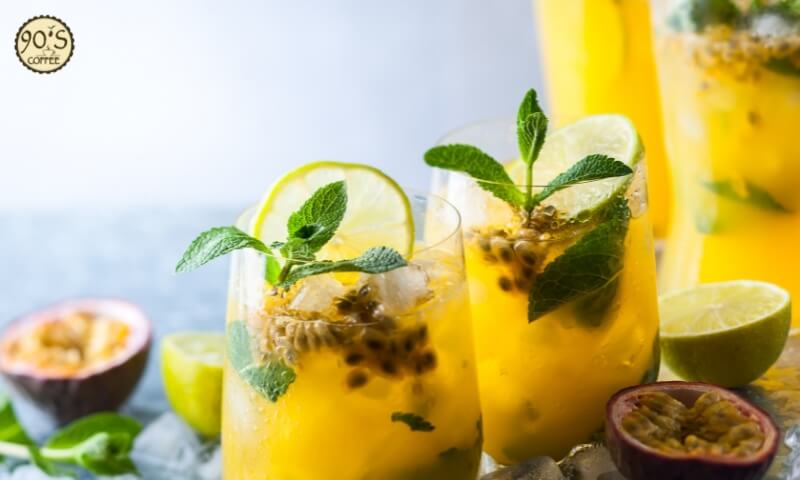
Add lemongrass and passion fruit juice or jelly on top of the glass; you can also attach a slice of fresh passion fruit or mint leaves to the rim of the glass to enhance the aesthetics when serving or photographing the product.
Watch now: 9 summer drinks to cool down your restaurant
3.1. The Standard Ratio for Sweet and Sour Passion Fruit Tea
The ideal ratio is usually 1 part passion fruit juice to 1.3-1.5 parts sugar syrup. This is a starting point for testing; the shop should taste and adjust according to the target customer's preference.
- For a more pronounced, satisfying sour taste: slightly increase the proportion of passion fruit juice and reduce the amount of syrup.
- To make it milder and easier to drink for most people: increase the syrup, reduce the amount of passion fruit, or dilute it with more water.
- To increase the overall intensity of the flavor: slightly increase the amount of base tea concentrate, and reduce the amount of filtered water/soda accordingly to keep the total volume constant.
3.2. Tips for Maintaining a Beautiful and Consistent Flavor in Your Tea Cup Between Brewings
- Always mix in the correct order (base mix first, then ice, and finally tea concentrate) to create a beautiful layering effect when first served, and to ensure a consistent flavor when the customer stirs and drinks.
- Use a measuring cup or scale instead of estimating by eye, especially with syrup and passion fruit juice – these two ingredients directly affect the sourness/sweetness.
- If selling for takeout, the ice and toppings should be packaged separately, or customers should be instructed to shake/stir well before drinking, as the tea and syrup may separate slightly during transportation.
Research: How to make peach and lemongrass tea
4. How to Calculate the Cost of One Glass of Passion Fruit Tea
The table below illustrates how to calculate the cost for a 500ml batch of tea concentrate (the figures are for reference only; the shop should use its actual ingredient prices):
| Thành phần | Serving size / serving | Original cost (per batch / per unit purchased) | Cost allocation / per unit |
| base tea | 150ml | 25g tea + 1.000ml water = approximately 4.000 VND / 1.000ml | ~600 VND |
| Passion fruit juice | 30ml (~1 – 1.5 fruits) | Fresh passion fruit ~ 6.000 VND / fruit | ~7.000 – 8.000 VND |
| Sugar syrup | 40 – 50ml | 500g sugar + 500ml water = ~12.000 VND / 1.000ml | ~550 – 600 VND |
| Filtered water / soda | 100 – 120ml | Soda ~5.000 VND / 330ml can (if using soda) | ~1.800 – 2.000 VND |
| Ice | ~150 – 180g | Pre-made ice blocks/ice cubes | ~300 – 500 VND |
| Cup, lid, straw | 1 sets | ~500 – 2000 VND | |
| Topping (jelly, if any) | Options | ~1.000 – 1.500 VND | |
| Total cost | ~13.000 – 16.000 VND |
Note: If you use regular water instead of soda, the cost of this part is almost zero, significantly reducing the total cost – this is also why many cafes only use soda for the "special" version on the menu and charge a higher price.
New item: How to make coffee panna cotta
Based on the total cost, the shop can apply a common pricing formula in the F&B industry: ingredient costs account for approximately 25-35% of the selling price. This ensures both a profit margin and price competitiveness in the market. For example, with a cost of approximately 14.000-15.000 VND/cup, a reasonable selling price would typically be around 35.000-45.000 VND/cup, depending on the market segment and location.
5. Variations for a Diverse Menu
- Passion fruit and honey tea: Replace some of the sugar syrup with pure honey.
- Passion fruit and lemongrass tea: Add crushed lemongrass juice to the tea base.
- Passion fruit cheese tea: Add a layer of salty cream cheese topping.
- Iced passion fruit tea: Blended with shaved ice, perfect for the peak of hot weather.
Refer to the recipe: Orange coffee extremely easy
6. Some Tips for Making Passion Fruit Tea More Delicious and Authentic
Besides the standard recipe and proportions, a few tips below will help your shop's passion fruit tea truly stand out and keep customers coming back:
Choose passion fruit at the right ripeness.
Prioritize those with slightly wrinkled skin but still firm and evenly heavy. This indicates ripeness, high juice content, a distinct aroma, and a balanced sweet and sour taste. Avoid unripe fruit (less juice, excessively sour) or wilted, lightweight fruit (lost aroma, slightly fermented juice).
Consider retaining the passion fruit seeds, as per the restaurant's positioning.
Completely removing the seeds results in a smooth, clear cup of tea, creating a professional and refined feel. Conversely, retaining some of the seeds adds a natural touch, enhancing the pleasant chewing experience – the shop can choose this style based on its serving preferences or try both, allowing customers to choose.
Adjust the acidity and sweetness levels flexibly according to the season.
The acidity of passion fruit varies considerably depending on the time of year it is harvested, so the "standard" recipe on paper sometimes needs adjustment in practice. Always taste both the sauce and the finished product before serving, especially at the beginning of each new season or when changing passion fruit sources.
Choose a suitable base tea to enhance the flavor of passion fruit.
Oolong tea comes in many varieties with distinct flavors – milky, floral, or a rich, traditional taste. Experiment with several base teas to find the most harmonious pairing with the sweet and sour taste of passion fruit, creating a unique and hard-to-replicate signature for your cafe's menu.
Conclude
Preparing the base tea in large batches, applying the correct brewing and thermal shock techniques, helps the shop produce passion fruit tea quickly, consistently, and maintain its attractive color throughout the day. It also makes it easier to control ingredient costs with each batch.
Frequently Asked Questions
Why does tea concentrate become discolored when left for a long time?
Common causes include brewing tea at the wrong temperature, brewing for too long, which extracts too much tannin. Alternatively, skipping the ice shock treatment immediately after filtering can also lead to rapid color loss. Improper or insufficiently cold storage can also cause the tea to lose its color quickly.
How long can tea concentrate be stored?
It should be consumed within 2–3 days, kept tightly sealed, and refrigerated to maintain its flavor and color.
Why shouldn't you brew tea with 100°C boiling water?
Excessively high temperatures will over-extract the tea, resulting in a bitter taste and loss of its natural aroma. A temperature of 90–95°C is suitable for most base teas used in beverages.
90S COFFEE
Supplier of pure roasted coffee beans & Coffee roasting/OEM services.
#caphesach #caphethat #capherangmoc #caphenguyenchat #90scoffee


